Showing posts with label batik. Show all posts

Monday, August 26, 2013

Jogja Jaunts

After Prambanan, Martha and I did some sightseeing around Jogjakarta proper. 

First, at the grocery store by our hotel, Martha marveled at the durian, king of fruits, stinkiest of stinky, spikey as all get out:


Then we hopped (well, squeezed, really) into a becak, Jogja's transportation mode of choice.  These bicycle rickshaws are all over Jogja (many of them parked, drive napping/lounging), used by locals and tourists alike.  Liz, Meghan and I had wanted to try them when we were in Jogja last, but three American butts is just too much for the becak...  two was pushing it (and pushing it is what our driver had to do occasionally on the inclines!):


We requested to be taken to one spot I had read about on the internet where you can take a batik-making lesson, and after some confusing back-and-forth in a garbled Bahasa Indonesia/English mix, we ended up at this place, which was not our intended destination (thanks, Indonesia, for making things confusing by having multiple streets with the same name), but worked out just fine!


We got to see the whole batik-making process, from tracing the design, to stamping the border design, to hand drawn batik (batik tulis, like Martha and I tried in Jakarta) and cap batik (where the wax is stamped onto the fabric using intricate copper stamps or cap), dyeing, hand-painting with dye, re-waxing and re-dyeing, and finally drying:

Tracing the design (for the batik tulis):


Prepping the fabric and stamping the wax borders:


It seemed that there was a division of labor along gender lines, at least at this factory, which the men doing the stamping and dyeing, while the women did the hand work, including applying wax with the canting and hand applying dye to certain sections of the design:


Here are the dudes doing the dyeing... red was the color of the hour:


Wax removal:


Blue-dyed batik drying in the rafters:


Here we are, trying out the cap process...  first the borders.  Dip the cap/stamp in the hot, hot wax:


Then carefully stamp the fabric, lining up the design in key places so it looks continuous:
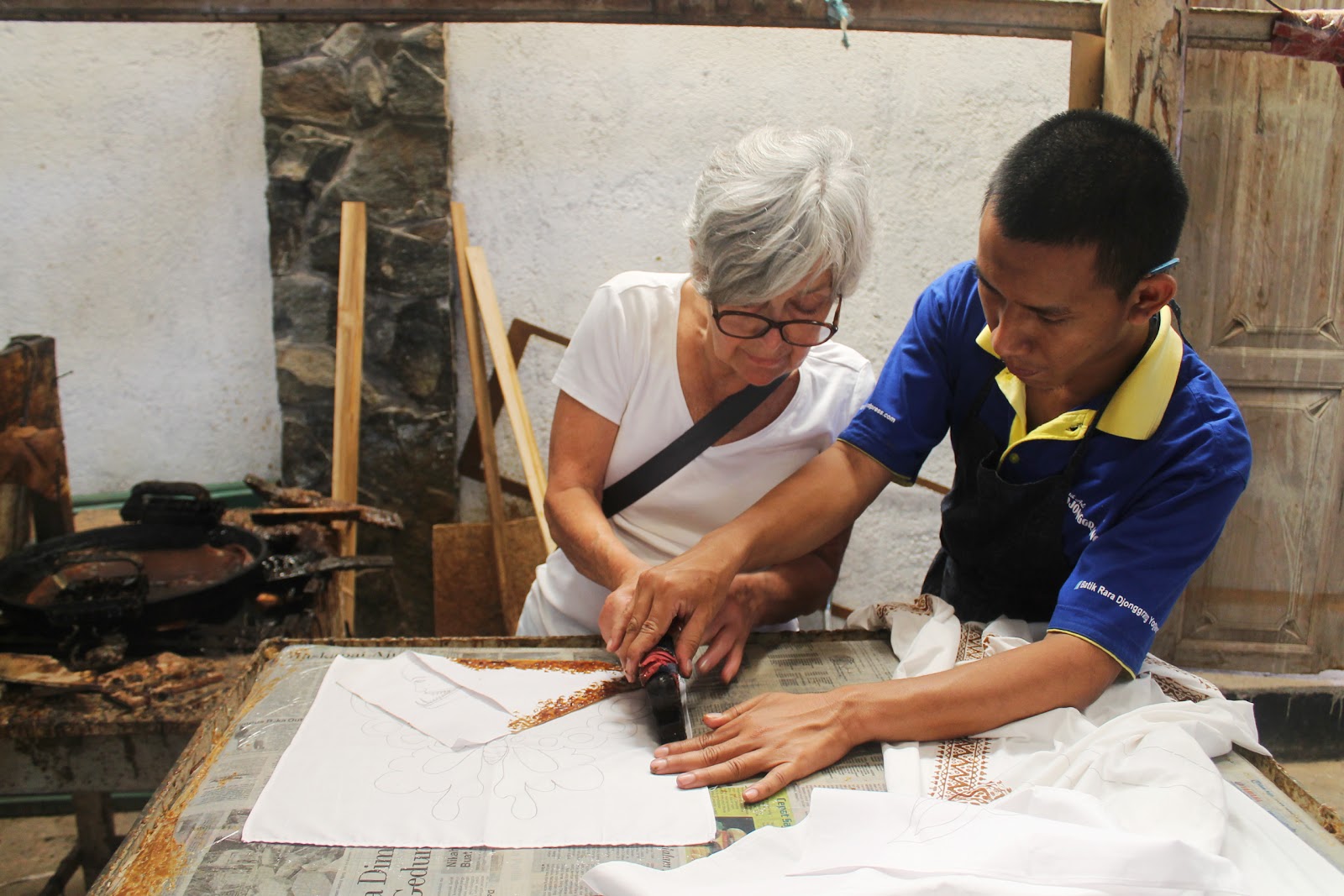

My turn:


Next we applied the main design, a large square-ish stamp:


Re-dip in the wax between each stamping:


Post-waxing, pre-dyeing: 


And post-dye!:


After our batik cap adventure, we hit the road for some more sightseeing and a whole lotta batik shopping on Jalan Malioboro... here are some scenes from the road, via becak:
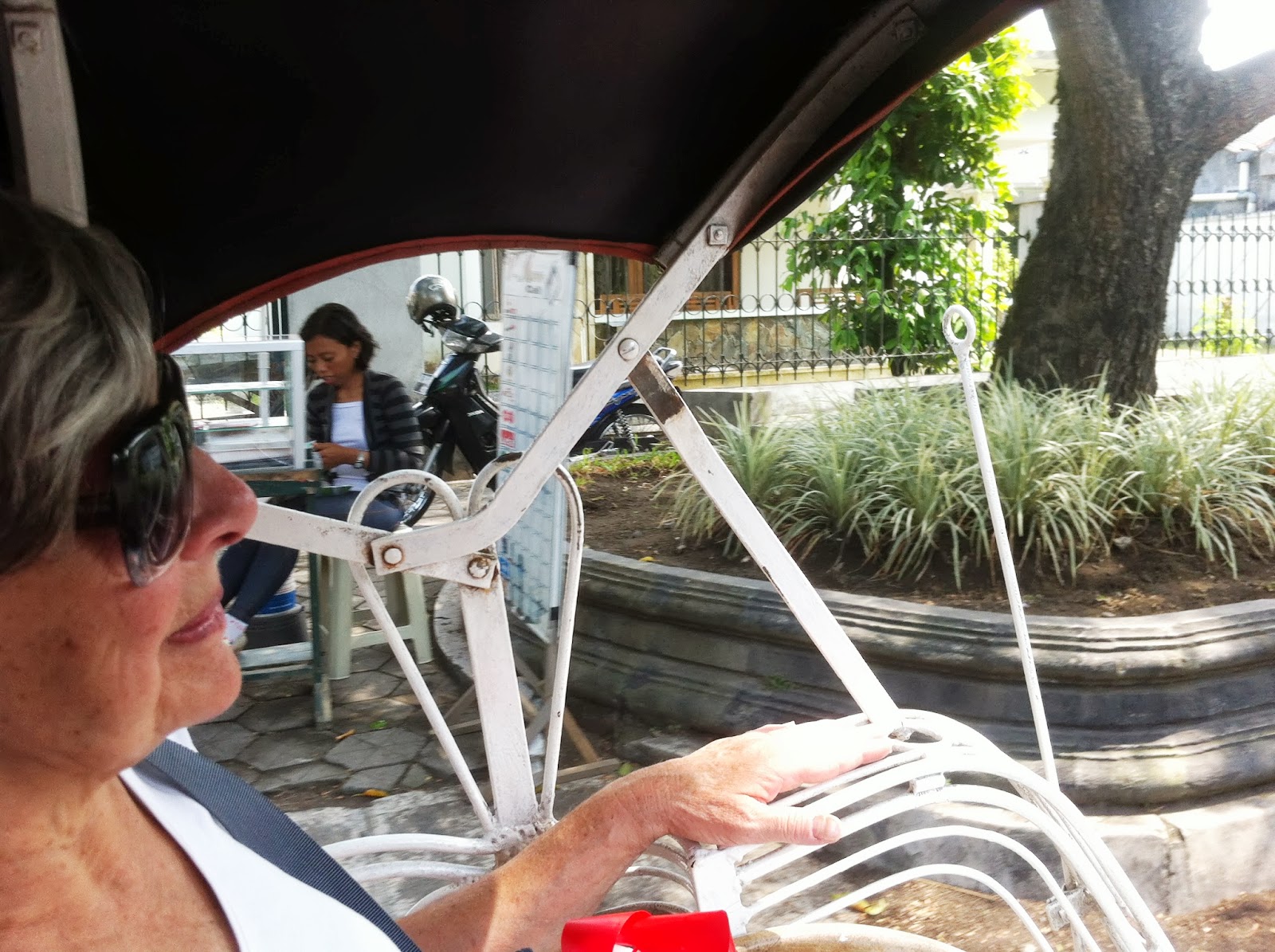

The walls of the keraton, the sultan's palace... lots of becak and motorbikes:


Martha posing with her batik stash... she brought an entire suitcase just for batik and filled it:


Saturday, August 17, 2013

Jakarta Jive

After Singapore, Martha and I headed to Jakarta to hang out with Lincoln, see some sights, and do some batik making and shopping.

First, we hit up Toko Maju in Pasar Mayestik so that Martha could experience extreme crafting claustrophobia amid the buttons and zippers:


Then we took a bajaj ride home (riding in the newer, natural gas powered blue bajaj was a first for me!  I had only taken the super-polluting orange ones previously!):


The following day we headed to the Textile Museum, which had long been on my list of places to check out.  The Museum itself consists of mainly batik (and a little bit of ikat) and doesn't have a ton of English signage, but we were able to muddle our way through with my limited Bahasa Indonesia skills...  They also had a cool natural dyes garden displaying all the plants historically used to make dyes for batik.


While at the Textile Museum, we took advantage of the opportunity to try our hand at making batik in the Museum's workshop.  We made batik tulis, which is the hand-drawn batik. Here's how the process works: we used a light table to trace some floral designs onto a square of cotton, stabilized the fabric with an embroidery hoop, then set about applying the hot wax to the fabric using the canting (chan-ting), which is a little fountain pen type thing: a wooden handle with a small metal receptacle on the end for holding wax and a teeny spout out of which the wax flows.  You dip the canting in the hot wax (kept hot over a little burner as you see below), wipe off the excess, and apply it to the lines you traced or drew on the fabric.  Everywhere you lay down the wax will remain white after you dye the fabric later.


Dudes, this is harder than it looks!  Martha and I both ended up with several messy drips of wax on our fabric, screwing up the design a bit.  The wax dries really quickly, and once it's on the fabric, it's on there for good, no erasing, as it seeps into the grain of the fabric. 


After you are finished outlining your design, then comes the dye process.  First, our friend here painted the outside edge with paraffin.  Then he mixed up the dye (not the natural dye, as it takes several days of soaking for the fabric to absorb the plant dyes) and tossed our fabric squares in:


After the dying process was complete, our friend brought the fabric over to a pot of boiling water (mixed with something caustic, as I understood...baking soda, maybe?) to melt the wax off the fabric:


Then, ta da, we had our batik, a little wet still, but finished!:


Martha's is purple, mine blue.  You can see the splotchy parts where we messed up, but it adds to the rustic charm, no?


While our batik dried, we took some silly photos next to the statue of a giant canting in front of the workshop:


Here's us with our finished work, as well as us with a friend we made at the workshop.  He was from Medan and was taking a two day batik course while in Jakarta.  His batik motif consisted of an under-the-sea theme with fish and sea plants, so everyone call him the fish man:


We made the obligatory trip to Monas, the national monument, where we had our photos taken with some tourists from Sulawesi (didn't get a shot of that, sadly, but I will refer you to similar paparazzi incidents here and here):


Also, we hit up Taman Fatahillah, which was pretty quiet during Ramadan. We took a tour of the Museum Wayang (Puppet Museum), which was pretty cool and then quenched our thirst at the overpriced but atmospheric Cafe Batavia, the colonial era bar/restaurant:


Not pictured, but we also spend some time sitting in Jakarta's notorious traffic, of course.