Showing posts with label Borneo. Show all posts

Saturday, December 8, 2012

Bird's Nest

On our way through Kumai on the way to meet the boat for our awesome orangutan trip, I noticed that there was a large number (like hundreds, maybe thousands) of loud, squawking birds flitting through the air all around the town.  Jenny also noticed that there were several strange, tall, concrete buildings with very, very small windows.  We pondered the meaning and purpose of these strange sights, but were too overwhelmed with orangutan anticipation to give it much thought.


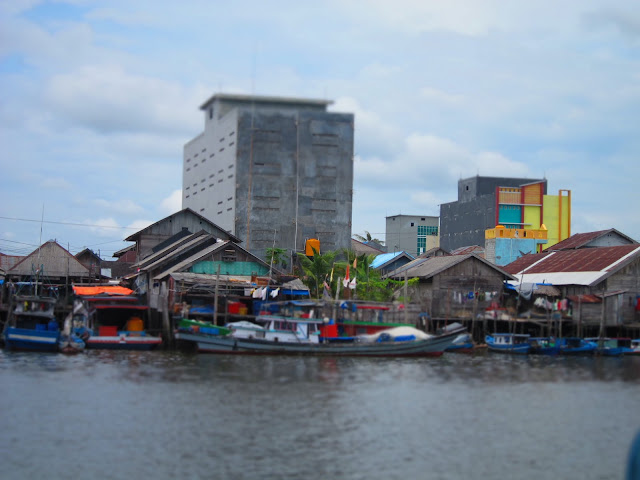
On the boat on the way back, as we approached Kumai and saw its strange skyline from the water, it suddenly clicked in my brain:  these buildings and all of the birds everywhere are basically a factory farm for bird's nests that are to be made into soup.  I had randomly watched a documentary on these nests but didn't make the connection right away.


Bird's nest soup is a Chinese delicacy made from bird's nests made from the saliva of cave swifts.  A bit creepy, but it's a majorly huge industry and the bird's nests are wildly expensive. The soup is supposed to have all sorts of health benefits, from libido stimulation to immune system boosting.  

The nests used to be collected from Indonesian caves where the birds naturally nest, but now that demand is so high for this luxury product that towns all over Indonesia, including Kumai, have devised a way to produce these nests in these giant concrete buildings.  The birds are attracted by birdsong CDs, then enter the buildings through those tiny windows and then build their nests in the rafters. The nests are collected, then they are picked clean of feathers and other impurities using tweezers, molded into the desired shape, packaged up and sold at exorbitantly high prices, particularly to Hong Kong.  The resulting soup can cost $30-100 per bowl, depending.

Here's a not-particularly-thrilling, but interesting video that shows you the inside of the bird houses.

Ya learn something new everyday, eh?

Friday, December 7, 2012

Stuck in the Middle

On the way back to Kumai after all of our orangutan adventures, we stopped by one of the tiny villages on the banks of the Sekonyer River.  I can't for the life of me remember or figure out the name of the village.... anyone?  anyone?  Bueller?

At the entrance to the village is a collection of canoes, to be used as taxis during the rainy season when the water level is high and the village is flooded... no cars, just canoes and a couple bikes and motorbikes for the dry season:


Some of the canoes have decorative hornbills on them:


The village has a complicated relationship with the company that cleared the land all around them and planted oil palm plantations.  Our guide told us that half of the village works for the company, whereas the other half works for the national park and/or orangutan foundation.  Either way, someone in the village is clearly upset with the palm oil plantation owners, as this collection of signs greets you at the entrance to the village:


Forgive me, for I am totally butchering this translation, but I think the one above says something about "still there are those that want to be bribed, the world says.  PT. BTP relies on bribes [something about capital and compacts]" 


This one is pretty straightforward: "PT. Bumi Langgeng Perdeanatrada is forbidden from entering the Sekonyer River basin."

In any case, the village was quite poor from what we saw.  There was an elementary school, but children had to head to Kumai (the port town) to go to high school.  The village is built on either side of a canal that runs parallel to the Sekonyer, with a long sidewalk/main street running alongside the canal:


This friendly guy was sewing together palm frond roofing tiles for the town's houses: 


Everybody in town had really cute potted flower and/or vegetable gardens, raised on wooden platforms in preparation for flooding:


Rickety walkways over the canal:


The town's one sidewalk gets busy when school lets out:


At the end of the town dock, there is a sign that says "Bon Voyage":


Wednesday, December 5, 2012

Orangutans at Camp Leakey

So... I think this is my last orangutan post, so you all that are sick of the hairy orange guys can breathe easy, whereas you all that are loving the fuzzy gingers will have to reminisce and get your fix by reviewing all of my previous orangutan posts (here, here, here, and here.).  

You could also get your fix by checking out some recent Borneo orangutan documentaries...  Born to be Wild (featuring our favorite, Siswi) was filmed in Tanjung Harapan and Camp Leakey, but I also liked the more in-depth look in the BBC documentary series, Orangutan Diary, which follows the rescue and rehabilitation efforts of the Borneo Orangutan Survival Foundation.


Our final orangutan viewing stop on the river was Camp Leakey, the base camp where all of the orangutan saving happens.  Founded in 1971 by Dr. Birute Galdikas, Camp Leakey is the starting point for all of the work of Orangutan Foundation International, including protection of orangutans and their forest habitat, rehabilitation, research, and education, among other things.

When we arrived the first time to Camp Leakey (we went back a few times), we were greeted by this fellow next to the dock named Chris:


The Camp Leakey feeding station was always busy, with both rehabilitated and wild orangutans coming and going:


Remember when I told you that the orangutans had many different drinking methodologies?  Here's the final (and funniest, I think) methodology, the scoop and pour:


Even the kids are doing it:


This one clearly took a giant swig of milk and then went to hang out in the trees, mouth full:


Camp Leakey seemed to be the gathering point for orangutan moms and their babies.  This mom, in particular, was funny, as rather than take the tree route to the feeding platform, she decided to walk straight through the crowd of humans with cameras:


On her way back down from the platform (mouth full of milk), she walked back through the crowd, raising her arms above her head, perhaps to look more intimidating?  Or maybe for balance? 


Ug, the babies were so cute:


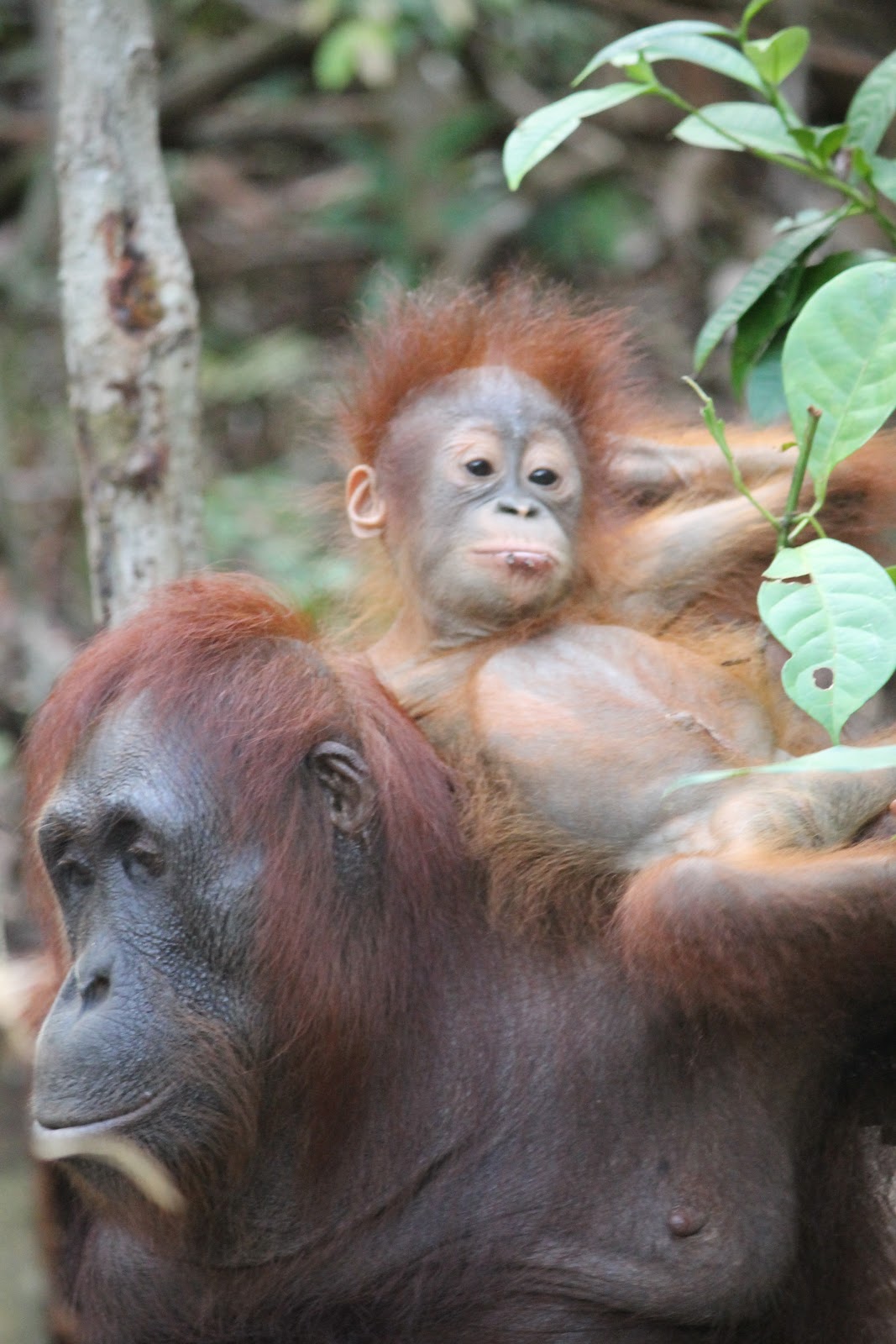
I love how the babies just climb all over the moms like they are a jungle gym, and, in turn, the moms never let the babies too far out of reach:


This baby looks like an old man:


And this one was a total ham, just hanging out on his mom's shoulders:


Ah, orangutan babies.  Staaaaahp.