The big daddy of Angkor Archaeological Park: Angkor Wat!
Angkor Wat (City of Temples/Temple City in Khmer) was originally built as a Hindu temple in the early 12th century by Khmer King Suryavarman II and dedicated to the god Vishnu. It used to be surrounded by a city and royal palace, which have long since disintegrated.
Now it's Cambodia's pride and joy- it's on the national flag.
Here's the view of the temple from outside the outer wall and moat that surround it... from some angles you can see all 5 towers, but from others it looks like there are only 3:

As an aside, if you'd like a digital tour of Angkor Archaeological Park, you can now (as of the past few weeks) use Google Street View to look at 90,000 panoramic 360 degree views of the temples, etc. We actually saw the Google car on the streets of Siem Reap when we were in town! Check it out!
We entered the temple via this causeway (in the open sun; omg, it was hot.):

There are several entrances into the walls but we took the one meant for elephants:


Even inside the gate meant for elephants there were some crazy intricate carvings in the stone walls. We thought this was a good sign about what lay inside the walls:

Once inside the walls, there was a scenic shot of the temple, complete with a random horse (??):


Also, a murky pond:

Here's a view of the 2 libraries and the causeway leading up to the temple:


Once inside the outer walkway surrounding the temple, you're treated to what seems like miles of bas-relief carvings. We walked anti-clockwise around the galleries. I'm pretty sure this relief below depicts the Battle of Kurukshetra, a mythical battle:


Our tour guide, at it again with the posed photos:

I think these ladies below are apsaras, female spirits of clouds and water:

I can't remember what this depicts, but some of the other bas reliefs show scenes from the Ramayana, the procession of King Suryavarman II's army, the 32 hells and 37 heavens of Hindu mythology (those were pretty intense), among others.

This is King Suryavarman II holding court (being fanned by his court and shaded by umbrellas, as royals are wont to do):

Some Sanskrit writing in the midst of the carvings:


You can see remnants of the red color that used to cover many of the sandstone carvings... apparently the red paint was made from tree resin:


This massive mural shows the Churning of the Milk Sea, in which demi-gods and demons pulled back and forth on the body of a snake in a massive tug-of-war, churning up the ocean:

So many carvings everywhere!


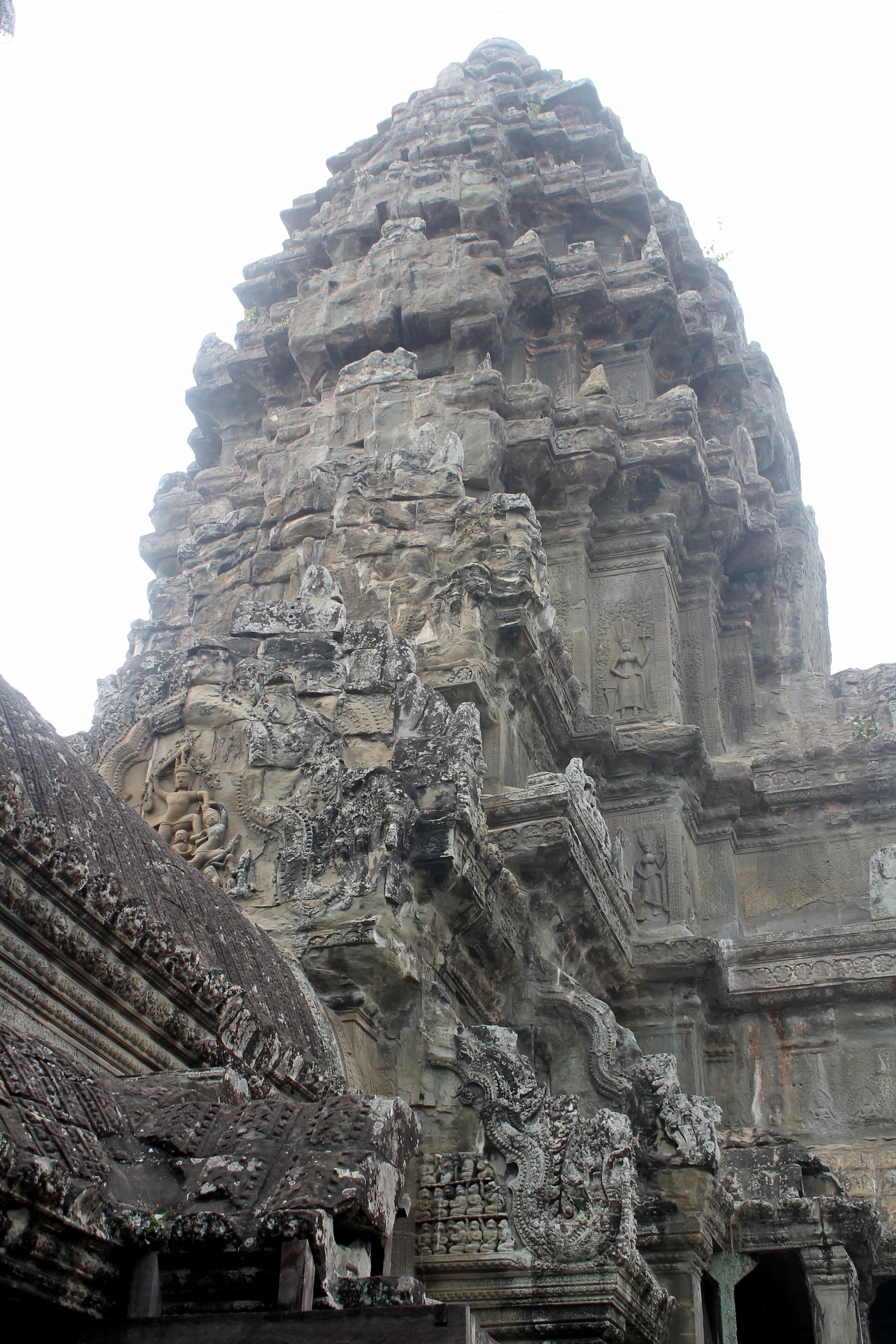
More apsaras:

We climbed to the top of the temple and caught this view facing out over the entrance, including the libraries and outer wall of the compound:


The Angkor Wat temple is meant to represent Mount Meru, the home of the gods. The five towers represent the five peaks of the mountain.


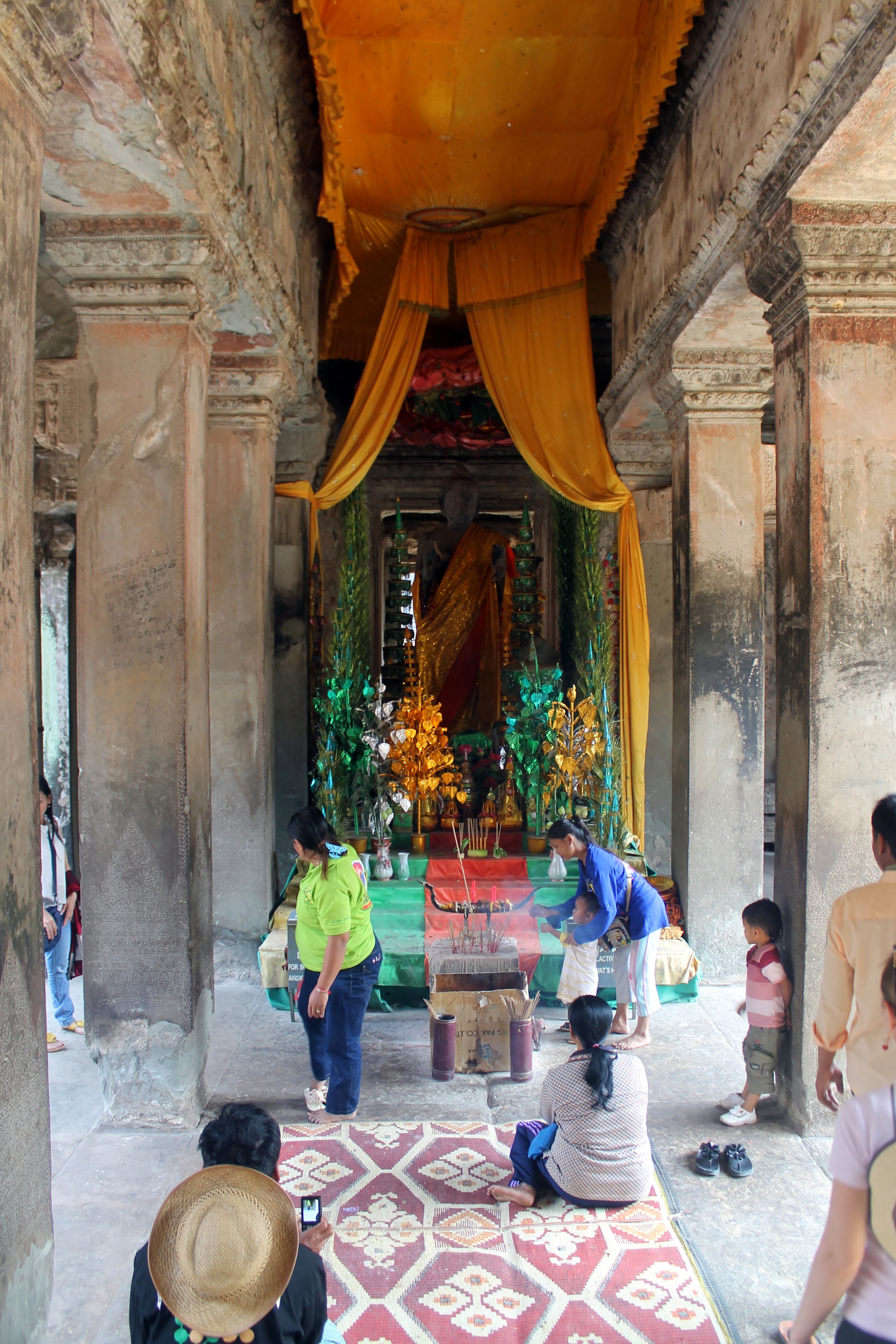
Angkor Wat was converted for use as a Theravada Buddhist temple in the late 13th century and remains so today. We saw many people saying prayers and making offerings at the temple, some of them crying while they did so:
Ahhh... the other side of the temple has a pond not covered in pond scum, better for reflection photos!


